



However, flexibility particularly around the hips and upper back heavily influences how you swing.
What the Research Shows
Data from the European Tour reveals that the spine and wrist are the two most common sites of injury in elite golf. Interestingly, age does not appear to be a major factor, though this might reflect the fact that injured players often leave the tour, skewing the data. The most reliable predictor of future injury? A previous injury. If you’ve experienced back pain before, you’re significantly more likely to develop it again, especially if the underlying causes remain unaddressed.Why Golf Injuries Happen: It’s Multifactorial
Golf injuries are rarely caused by one issue alone. Instead, they result from a mix of physical, psychological, and load-related factors interacting over time. Sports science models such as those developed at Arsenal FC’s medical department highlight these major contributors:- Physical: strength, flexibility, fatigue
- External load: total training and playing volume
- Internal load: stress, anxiety, poor sleep
Strength: Building Resilience, Not Risk
Research consistently shows that strength training reduces injury risk. Well-designed programs make muscles, tendons, and joints more resilient, helping them tolerate the repetitive forces of the golf swing. Many golfers fear that lifting weights will cause injury, but the opposite is true when training is properly planned and progressed. Injuries tend to occur when golfers increase intensity or volume too quickly. Tip: We have strength programs for both improving performance and lowering injury risk on our application.Load Management: Avoiding the Injury “Spike”
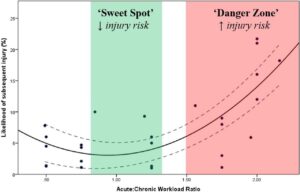
Your training load is the total work your body does, practice, gym sessions, rounds, and competition. In football, this is tracked with GPS data. In golf, a simple measure is hours per week. Studies from Australian Rules Football show injury risk rises sharply when training load increases by more than 50% week-to-week. For example:- If you usually practise for 4 hours per week
- And suddenly increase to 6 or 8 hours
- Your risk of injury can double
- Build up gradually before busy competitive periods
- Avoid large, sudden jumps in practice time
- Include recovery days during heavy playing spells
Stress, Sleep, and Recovery: Managing the “Internal Load”
Golfers often overlook how mental and physical stress impact their body’s ability to recover and adapt. Poor sleep, high stress, and mental fatigue are all linked to increased injury risk in athletes. Practical steps:- Keep a consistent bedtime and wake-up time
- Minimise screen use before bed
- Include regular movement and exercise
- Try mindfulness or breathing strategies
- Speak to a sports psychologist if stress or anxiety persist
Flexibility and Mobility: Function Over Form
Contrary to popular belief, there’s no strong evidence linking poor flexibility directly to injury.- ≈45° of thoracic (upper back) rotation
- ≈40° of hip rotation
Technique: Helpful but Hard to Isolate
At present, there’s no conclusive scientific link between swing technique and injury. That said, certain movement patterns can exacerbate existing issues. For example:- Excessive side bend at impact can stress the lumbar spine
- Extreme ulnar deviation (hands high, clubhead down) or having the arms away from the body (creating a long lever) at impact can overload the wrists.

