

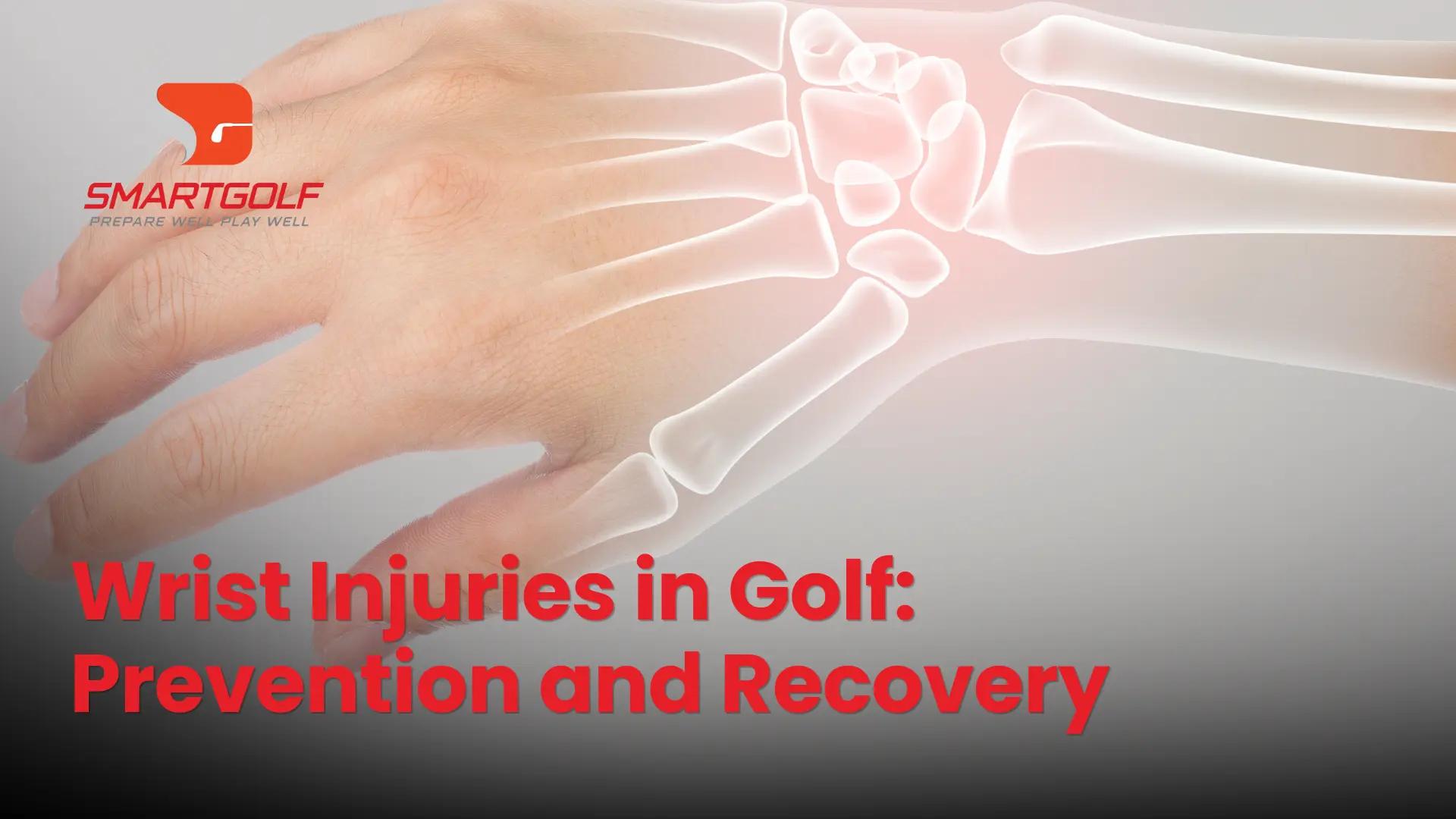

Why the wrist takes such a beating in golf:
Two things make the wrist vulnerable. First, repetition: a golfer who plays and practises regularly can load their wrists thousands of times a week, and repeated stress with too little recovery is how overuse injuries start. Second, impact. Every time the club strikes the ball or, worse, the turf behind it, force travels straight up through the wrists. A single fat shot into a firm fairway or a hidden root can jolt the joint hard. The lead wrist (the left wrist for a right-handed golfer) usually takes the brunt, which is why that's where most golfers first feel it.The injuries golfers actually get:
You don't need to self-diagnose, but it helps to know the usual suspects. Tendon irritation on the thumb side or back of the wrist is the most common, an ache that builds with play and eases with rest. Sprains happen when the joint is forced beyond its range, often from a heavy strike. And there are more serious ones, like small fractures of the hamate bone (a bone in the palm the grip presses against) that can result from repeated impact or a jarring shot. That last group matters because they don't get better with "just resting it" and need proper assessment, which we'll come back to.Prevention: four things that keep wrists healthy
1. Warm the wrists up before you play. Cold wrists going straight into full-speed impact is asking for trouble. A minute of gentle wrist circles, flexion and extension, and a few graded practice swings makes a real difference; it's the same principle behind a proper full-body pre-round warm-up, just applied to the joint most exposed at impact.
2. Build forearm and wrist strength. This is the big one, and the most overlooked. Strong forearms and wrists absorb impact far better than weak ones; they act as shock absorbers instead of transmitting every jolt into the joint. Simple strength training for golf swing performance pays double here: wrist curls and reverse curls, farmer's carries, and grip work all build the resilience that lets your wrists handle repeated loading without breaking down. You don't need heavy weights; you need consistency. A good golf fitness app will build this kind of forearm work into your routine precisely because it protects the wrist and adds control through impact.
3. Mind your grip pressure and technique. Gripping the club in a white-knuckle death grip loads the wrist tendons far more than a relaxed hold. And a swing that consistently strikes ground-first sends repeated shock through the joint. You don't have to rebuild your swing alone, but easing your grip pressure and being aware of heavy turf contact goes a long way.
4. Respect your load. Most wrist overuse injuries come from doing too much, too soon, a sudden jump in range sessions, or hammering balls for hours before a competition. Build up gradually, and give your wrists genuine rest between heavy days.
Recovery: what to do when it's already sore:
If you've caught it early and it's a mild ache, the classic advice still holds: relative rest (back off the aggravating activity rather than sitting completely still), gentle movement to keep the joint mobile, and a gradual return rather than jumping straight back to full swings. Ice can help settle an angry flare-up in the first day or two. But here's the important part: the wrist is one joint where "just play through it" genuinely backfires. If your pain is sharp, swollen, clicking, weak, or simply not improving after a couple of weeks of sensible rest, get it assessed properly rather than guessing. Some wrist injuries (those small fractures especially) look like ordinary strains but need very specific management, and the longer they're left, the harder they are to fix. A structured golf rehab programme does what self-management can't: it identifies exactly what's injured, protects it while it heals, and rebuilds the strength and range in the right order so you come back robust rather than fragile. Recovering properly once beats limping through half-recovery for a whole season.Making prevention a habit:
Nearly every golfer knows they should do a bit of forearm and mobility work. The gap, as ever, is doing it consistently when life keeps getting in the way. That's the whole idea behind Smart Golf: the reminders prompt you when a session is due so it's planned into your week, and the leaderboards make your consistency visible instead of something only you know about:- Birdie (–1): completed on the scheduled day.
- Par (0): completed late, but before your next session.
- Bogey (+1): session missed.
